“My vision for the East Palo Alto Community Garden is for it to be a place for residents to grow their own food, be a hub of learning for gardening and urban farming, and be a space for community members to gather and engage with each other.”- Laura deTar, Executive Director
An Empty Field
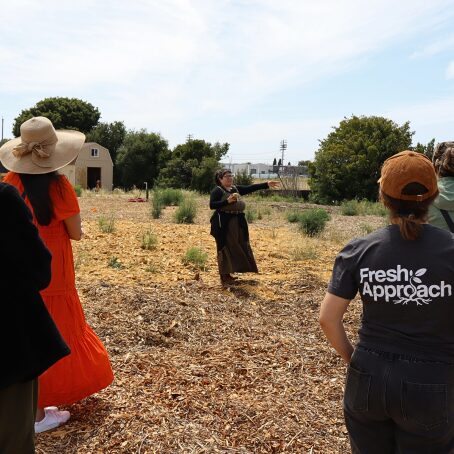
An empty field with piles of mulch, weeds, and big dreams.
“When we first moved to our new space, it felt like having a big clean canvas to paint on: I’m able to plan out and leave big strokes on the canvas, which is empowering and exciting. I can’t wait to see how this painting turns out.”-Anthony Otonari, Community Garden Program Specialist
That’s what 230 Demeter St looked like in June 2025 when Fresh Approach held our opening ceremony with friends, neighbors, and local officials for the new East Palo Alto Community Garden. One year later, walking along the gravel paths amongst the planter beds blooming with veggies and flowers, you wouldn’t realize you were in the same space. The magic you feel walking through the garden comes from the tender care and love that everyone has intentionally put forth to make this a place for the community.
But it hasn’t been easy as Community Garden Program Manager, Vera, shares.
“Setting up a new garden space is laying out the foundation to something bigger than us, something that the community needs/wants and I hope will be here for generations to come. It’s been hard work to transform an empty field into an oasis where birds, butterflies, and people can thrive.”
Tilling the Soil & Growing Community
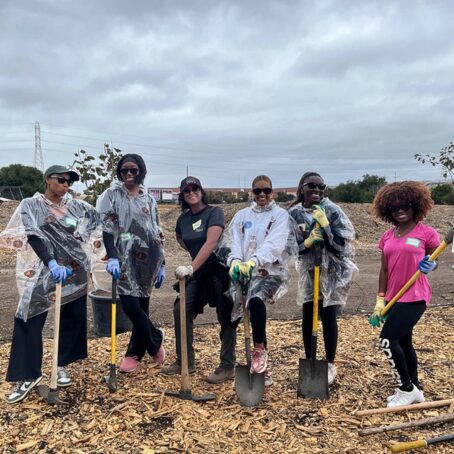
So, how did we go from an empty field to where we are now?
Well, it wasn’t overnight.
In the last year, tool sheds and compost systems were moved from the old garden, electricity and water lines were installed by way of generous donors, raised garden beds and plots were constructed through the labor of 70 plus volunteers, and the drip irrigation system and a greenhouse were built by the hands of our garden team.
For Anthony, it was the drip irrigation system installation that stuck out to him: “Being able to take full agency over a project and complete it with my own hard work was very rewarding. Of course, it was extra rewarding seeing and helping gardeners start setting up the irrigation inside their beds. I’ve never been a happier man than seeing water dripping from those lines in the garden beds, a moment that really put into perspective all of that hard work.”
All of the while, programming still went on. This is where our community ambassadors truly shined. Their hard work and support in the garden facilitated workshops and compost hub programs, their knowledge and passion helped us in documenting new systems for the garden, and their connections to the community aided in our outreach efforts and improving our programming. They have collectively solidified our work and connections to the community.
As Anthony and Vera note, “Without ambassador support, we would not be able to do what we do. They are the backbone of the community garden programs.”
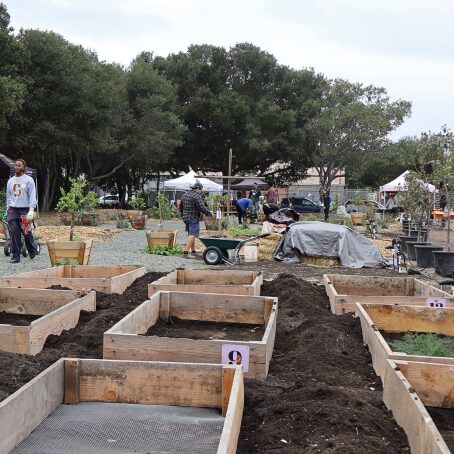
A space for the community members to grow their own food, develop connections with one another, and build skills through shared learning and experiences. From a barren lot of weeds and mulch to an oasis of sprouting plants for the community. Seeing this coming together in real time was nothing short of magical.
“It was so exciting to see the gardeners bring more greenery to the garden and have people easily access the space for themselves,” Community Garden and Food Access Program Specialist Jazmin shares, “I was also happy to have our greenhouse up and running for us to have a steady stream of plants to distribute to community members for their plots.”
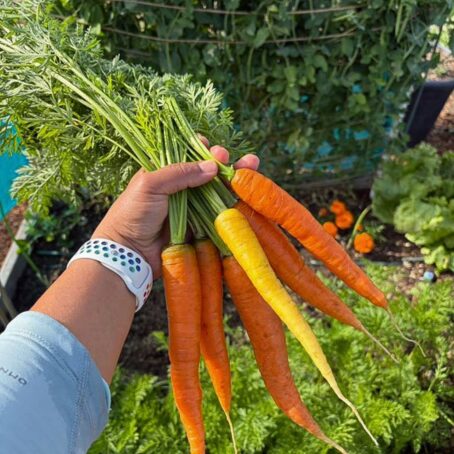
However, the biggest milestone for the East Palo Alto Community Garden happened just a couple of months ago, when the gardeners began harvesting from their plots. Through all the hard work from the last year to turn the garden into a space to feed the community, seeing local community members harvest their carrots, fava beans, and radishes has been affirming to the mission of our work in the garden. It makes all the work worth the effort to see folks being able to not only feed themselves, but share their bounty and knowledge with other community members.
“To provide that access for them to have a bit of sovereignty over their food. Seeing them come to the garden and water, harvest, plant, or tidy up their space is amazing. Because of them, we are creating a space for all of us to rejoice, to laugh, to grow.” Vera shares.
Nourishing Seeds of Dreams
With the foundation set for the East Palo Alto Community Garden, what’s next for the space? As we look back at the milestones and accomplishments of the work invested into the garden, what’s our plan to keep the momentum going?
It starts with the community: just in the last few months we’ve held some forums to get feedback and input on what folks want to see in the garden. We want to understand their vision, so our efforts are in alignment with their needs. Intentional.
Vera shares, “I want to be intentional with everything. I want other organizations/residents to use the space. I want this space to be for the community by the community. I want this place to be here in perpetuity to serve the East Palo Alto urban agriculture community, a space where this history lives on, where the seeds of our past continue to grow for the generations yet to come.”
And of course, we will continue to dream as we learn more.
The team collectively envisions expanding the garden’s role as hub for the community, not just for gathering but an expanded place of learning, nourishment, and leadership. Talks of an outdoor kitchen and pantry for people to easily access locally grown food; beautifying the space with more shade structures, art, and trellises to make it more inviting; and more community gatherings led by members of the community, have been excitedly discussed.
Jazmin shares, “I want more flowers, art, shaded comfy resting areas. I want to make sure that it is as inviting as we are capable of making it because this is a space for the people to enjoy.”
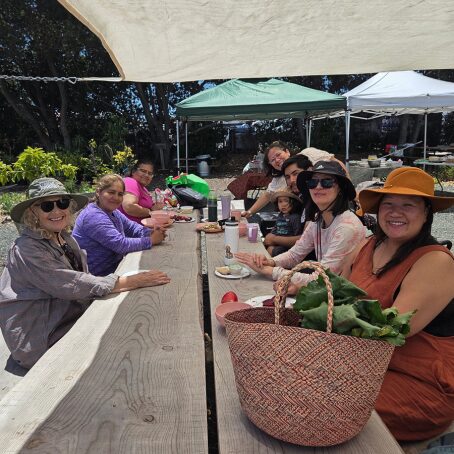
Community Garden Ambassador, Judy, sums up our sentiments perfectly: “My hope for this garden is that it truly becomes permanent, where we can plant trees that will give shade to community members for a very long time, in a space that serves as an asset for the community, and a safe place to gather and share.”